Wissenschaftsschwerpunkt der
The international Master’s program AIIS offers students a broad variety of research-based courses in a vibrant interdisciplinary environment benefitting from renowned researchers in the field of AI, Cognitive Systems, and robotics. Students will have access to the unique laboratories, equipment, and computing resources for their courses, projects, and theses. Many research groups offer part-time jobs as research or teaching assistant.
AIIS students receive comprehensive training in theoretical, practical, and applied AI while specializing in “Cognition-Enabled Robotics” and “Machine Learning & Cognitive Systems”, choosing one of the two as major and the other as minor. Other features of AIIS are the Guided Research Model – an independent student research project with individual supervision by a professor – and the Bremen Concept and Bremen model concept. While the latter is a project study in larger teams, the former is an independent research project with individual supervision by a professor.

AIIS is a four-term program comprising 120 credit points (CP). Courses will be taught in English and international students are very welcome.
AIIS is anchored in the faculty of Mathematics and Computer Science and part of the high-profile area “Minds, Media, Machines” of the University of Bremen allowing students a broad range of study courses and insights into related research fields.

Applicants for the AIIS Master’s program are expected to meet the following prerequisites:
Submission of an application is possible from the start of February to March 15th of each year. Places are limited and will be granted to only the best applicants. Applicants are encouraged to apply early. Courses will start mid-October of each academic year, and follow the German academic year with a winter term (courses mid October – beginning February) and a summer term (courses mid April – mid July). With the term breaks lasting several weeks, there is plenty of time to benefit from the AIIS network for internships, student jobs, or other professional development.

Universität Bremen
High Profile Area Minds, Media, Machines
Enrique-Schmidt-Str. 5, 28359 Bremen
Prof. Dr-Ing. Tanja Schultz
aiis-info@uni-bremen.de
Contact point and study advice:
szi@uni-bremen.de
Further Information:
Bremen is a very welcoming city of ~ 570.000 residence, located in north-west Germany close to the North Sea coast: www.bremen.eu . It is host of the premier international AI-conference IJCAI-2026: www.ijcai.org/. Bremen is home of the ambitious, agile, and creative University of Bremen: www.uni-bremen.de. The University of Bremen has a strong international reputation for its research in the field of computer science, AI-enabled robotics, and Cognitive Systems. It offers a broad range of intramural student activities, such as
Incoming international students will be supported by the Welcome Center. As a student at the University of Bremen, you will have free access to public transport in the state of Bremen and neighboring Lower Saxony as part of your tuition fee (~ 344 € per semester).

AIIS is designed to prepare students for research and development positions in academia or industry in the fast-growing field of AI such as scientist, research engineer, data scientist, or AI consultant. Throughout their studies, AIIS students will have the opportunity to connect with top-notch researchers of the University of Bremen, as well as with leaders of technology companies in and around Bremen, e.g. through internships and Master’s projects.
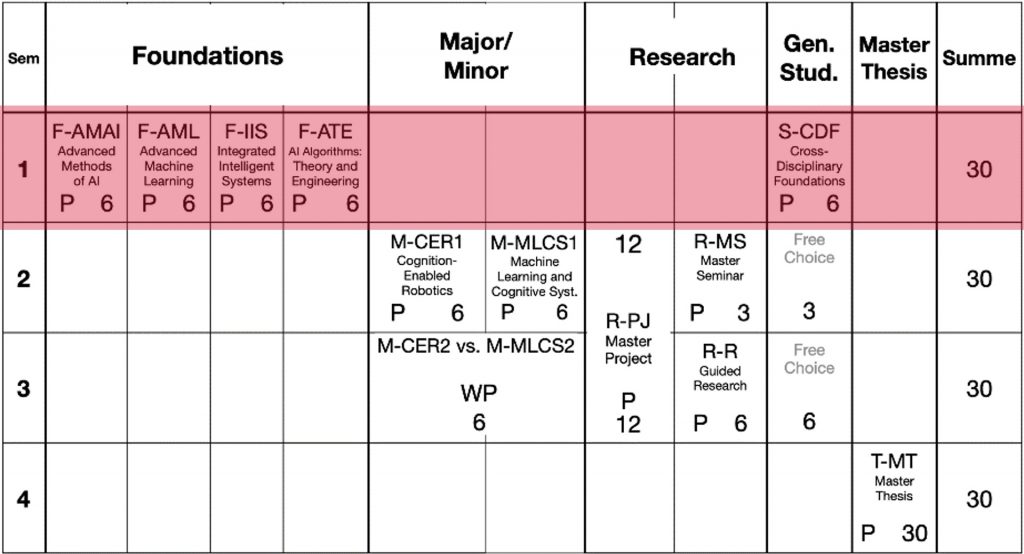
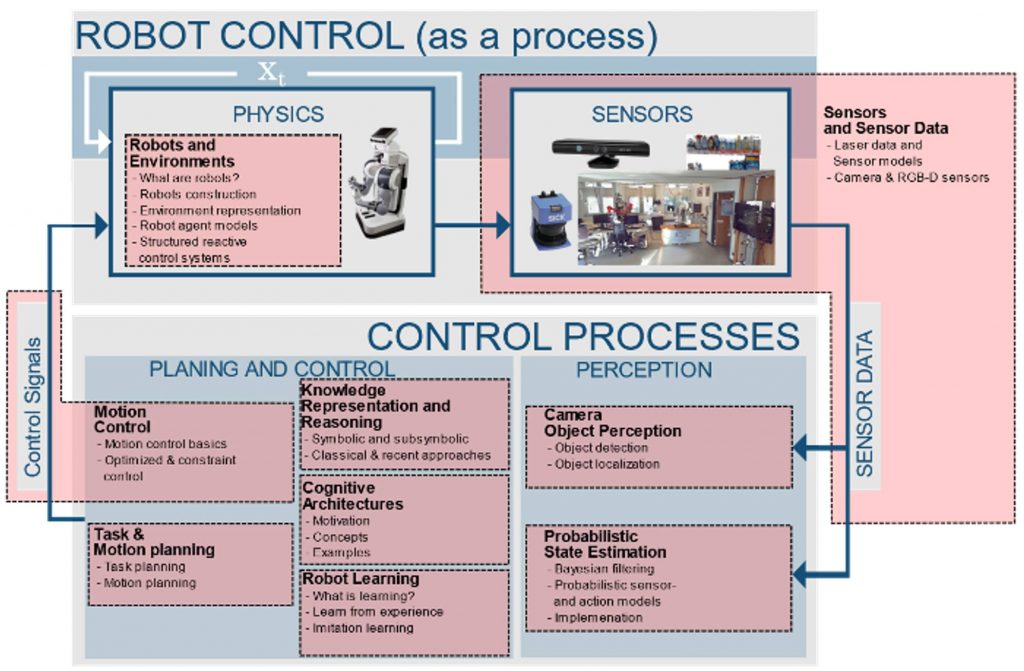
The following topics are covered in particular:
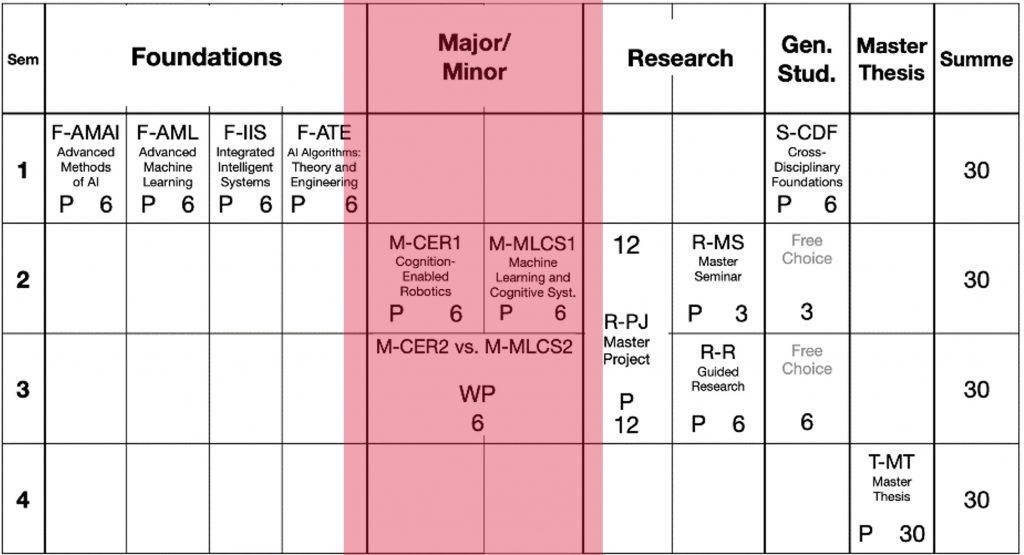
Students in AIIS specialize in “Machine Learning & Cognitive Systems” (MLCS) and “Cognition-Enabled Robotics” (CER). You choose one of them as your major and the other as your minor.
In the second semester, you choose one MLCS course and one CER course. In the third semester, the specialization you choose for your course becomes your major.


The Guided Research Module gives students the opportunity to gain practical experience in independent scientific research. In close coordination with a supervisor, students develop a research question, investigate it systematically, and work towards producing a scientific paper with the potential for publication.
1. Choose a Topic
Select a Guided Research topic from the topics offered by the AIIS research groups.
2. Start Your Research
After allocation, get in touch with your assigned supervisor to discuss the topic, refine the research question, and formally begin the module.
3. Complete the Module
Conduct the research independently and prepare the scientific paper. The module must be completed within a maximum of three months from the date of confirmation.
Note: The topic list and allocation information may change regularly. Please refer to the latest topic list and instructions when choosing your topic; if your assigned supervisor becomes unavailable due to unforeseen circumstances, you may approach another available supervisor, provided the topic has not already been allocated.
The Master Seminar allows students to explore a given topic in depth through scientific literature, discuss their findings, and present their knowledge. Worth 3 CP, it develops skills in research, presentation, discussion, and academic work.
The offerings may vary from semester to semester. Current Master Seminars can be found in Stud.IP under Master courses.
1. Choose a Seminar
Review the available Master Seminar topics and select one that matches your interests.
2. Study the Topic
Students work with the literature provided for the seminar, identify additional relevant papers, and build their knowledge of the topic.
3. Present and Discuss
Students present their findings and communicate their understanding of the topic while discussing it with the professor and other participants.
The Guided Research Module gives students the opportunity to gain practical experience in independent scientific research. In close coordination with a supervisor, students develop a research question, investigate it systematically, and work towards producing a scientific paper with the potential for publication.
1. Choose a Topic
Select a Guided Research topic from the topics offered by the AIIS research groups.
2. Start Your Research
After allocation, get in touch with your assigned supervisor to discuss the topic, refine the research question, and formally begin the module.
3. Complete the Module
Conduct the research independently and prepare the scientific paper. The module must be completed within a maximum of three months from the date of confirmation.
Note: The topic list and allocation information may change regularly. Please refer to the latest topic list and instructions when choosing your topic; if your assigned supervisor becomes unavailable due to unforeseen circumstances, you may approach another available supervisor, provided the topic has not already been allocated.
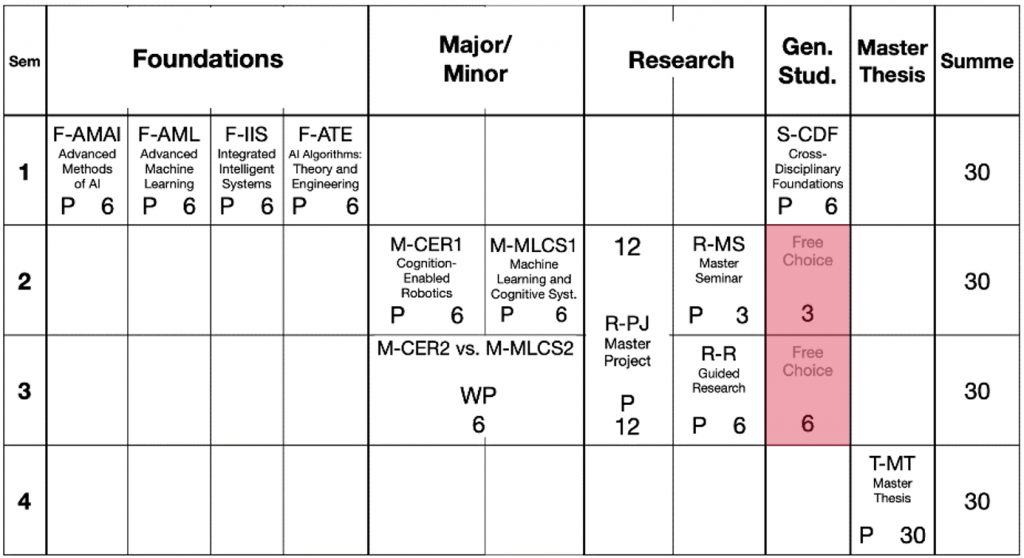
Free Choice is worth 9 CP and allows students to choose courses that complement their AIIS studies. You can combine courses with different CP values, and there is no fixed number of courses required, as long as you pass assessments totalling 9 CP.
Note: Check the current course catalogue and module information. If you are unsure about a course’s eligibility, clarify it with the relevant lecturer, module coordinator, or PABO before registering.
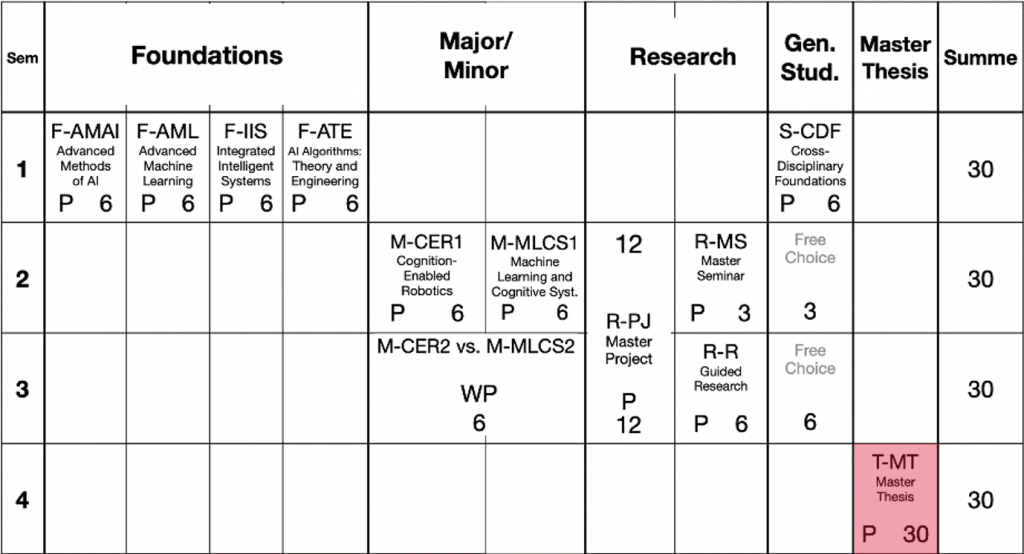
The Master’s Thesis allows you to conduct independent research on a topic related to your interests. The thesis, including the colloquium, is worth 30 CP.
Before you can register your thesis, you must have completed at least 60 CP. The official processing period is 24 calendar weeks (168 days). The thesis is written in English unless German has been approved. The written thesis counts for 67% of the module grade, and the colloquium (defense) counts for the remaining 33%.
You can explore the topics offered by AIIS research groups and supervisors. A topic may also grow out of a Master Project, Guided Research, or previous coursework. External or industry-related topics are possible with a suitable University of Bremen supervisor, although they are generally not recommended.
The AIIS Examination Board may approve an extension of up to eight weeks after a justified application. Extensions are not automatic. In cases of illness, a separate procedure applies, and medical documentation must be submitted to the Examination Office.
For detailed regulations, see the AIIS Examination Regulations, §6, and the information on illness and thesis deadlines.